
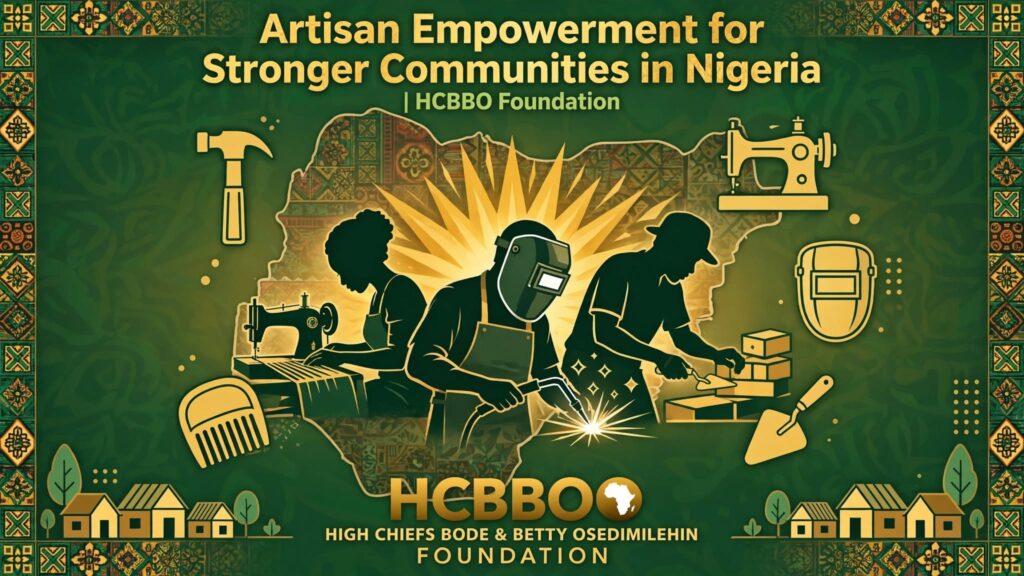
Without artisans and their work every productive nation can’t survive, the backbone of any successful community are the people who work, produce, mend, construct, supply and provide services. From tailors and cabinetmakers to electricians and mechanics to caterers and fashion designers the service and skills sector is an essential part of the Nigerian economy.
Why Artisan Empowerment Matters in Nigeria
Vocational skills provide a practical pathway to earning a living. While formal education remains essential, technical and vocational training can also equip people with the knowledge and experience required to become financially independent.
An apprentice who learns tailoring, plumbing, electrical installation, catering, or another trade can gradually develop the ability to earn an income and serve the community. With the right training, equipment, and business knowledge, that individual may eventually establish a small business and employ others.
However, learning a trade is only one part of the journey. Many artisans need access to modern equipment, professional development, business guidance, and opportunities to reach new customers.
Supporting these needs can help transform existing skills into sustainable livelihoods.
How Supporting Artisans Benefits Families
The impact of artisan empowerment extends beyond the individual receiving support. When a skilled worker earns a more reliable income, the benefits can reach the entire household.
Parents may find it easier to pay school fees, purchase learning materials, provide nutritious meals, and meet other essential family needs. Children can also benefit when their parents have better opportunities to earn a living.
This connection between livelihoods and education is particularly important. A family’s financial circumstances can influence a child’s ability to remain in school and pursue future ambitions.
Helping adults strengthen their earning capacity can therefore complement efforts to improve educational access for children and young people.
Empowerment is not simply about helping someone earn more money. It is also about creating conditions in which families can plan for the future with greater confidence and dignity.
Creating Opportunities for Young People
Nigeria’s young population represents enormous potential. However, young people need access to opportunities that enable them to develop useful skills, gain experience, and participate meaningfully in the economy.
Artisans also have an important role to play in passing knowledge from one generation to another. Through mentorship, experienced professionals can help younger people develop technical abilities, discipline, confidence, and a sense of responsibility.
When practical skills are combined with education and business knowledge, young people are better positioned to make informed decisions about their futures.
Don’t Miss: HCBBO Foundation Media Team Visits Scholarship Beneficiaries to Assess the Impact of Education Support
Building Stronger Communities Through Opportunity
This community grows more resilient when its individuals are able to work hard. Local traders offer their skills to households, schools, organisation and business. This would keep transactions in the community and even generate more jobs.
… And similar opportunities can arise across any number of trades, such as an expanding tailoring operation needing apprentices; a booming catering business providing opportunities for food suppliers and delivery drivers; and the fields of construction, home repairs, fashion, or ag-related services.
These possibilities demonstrate why community development should consider both educational support and practical economic empowerment.
Meaningful support does not always require a large intervention. Access to relevant training, professional advice, suitable tools, mentorship, or connections to potential customers can help an artisan take an important step forward.
The most effective support begins by understanding people’s needs and identifying realistic ways to help them build on their existing abilities.
The HCBBO Foundation’s Commitment to Opportunity
The mission of the HCBBO Foundation centres on creating opportunities that can positively influence lives and communities. Through its education-focused initiatives and scholarship support, the Foundation recognises the importance of helping individuals access opportunities for a better future.
Extending this conversation to vocational skills and artisan empowerment highlights another important dimension of community development: people need different pathways to reach their potential.
For some, the opportunity may be continued formal education. For others, it may be vocational training, professional mentorship, or the resources needed to develop an existing skill.
Recognising these different pathways encourages a broader understanding of empowerment, where education, practical skills, and economic opportunity can complement one another.
As communities continue to seek sustainable ways to improve living conditions, supporting people in developing their abilities remains a worthwhile investment in human potential.
A Better Future Begins With Opportunity
For the HCBBO Foundation and other organisations committed to social development, the central message is clear: opportunity takes different forms, but its impact can extend far beyond the individual who receives it.
When people are equipped to develop their abilities and use them productively, families gain new possibilities, young people can see alternative paths to success, and communities become better positioned to grow.
A stronger future begins when people are given the opportunity to learn, develop their skills, and turn their potential into progress.
Read More: Why Every Child Deserves Education | HCBBO Foundation