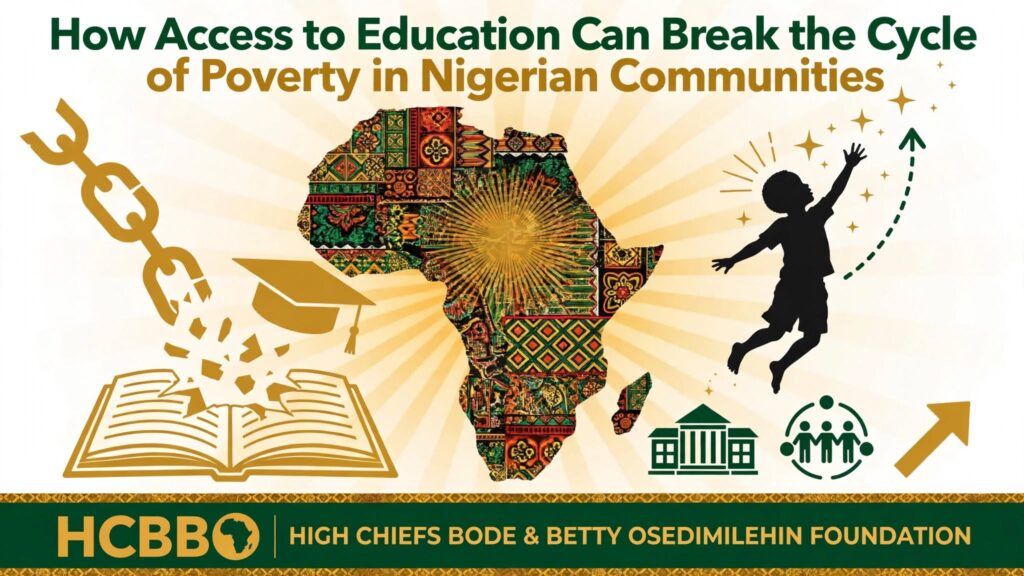
Education is more than a stepping stone to a certificate. It provides families with the information, skills, and confidence to choose the kind of future they want, and the ability to work toward it. But for many families in Nigeria, the barriers to good education are worryingly high: poverty, lack of materials, and inequality.
If a child cannot stay in school because the family cannot meet the costs of education – the impact can be felt well beyond the classroom. The child may miss out on the opportunity to realize his or her potential and the family remains trapped in poverty. Support to access education therefore plays a crucial role in helping Nigerian families escape poverty.
Understanding the Link Between Education and Poverty
How Education Creates Opportunities for a Better Future
1. It improves access to employment and skills
Education helps people develop literacy, numeracy, critical thinking, communication, and problem-solving skills. These abilities are useful across many professions and can help young people prepare for employment, vocational training, or entrepreneurship.
As Nigeria continues to develop across different sectors, people with relevant knowledge and practical skills are better positioned to explore available opportunities. Education does not guarantee employment or financial success, but it can expand the choices available to an individual.
2. It helps families make informed decisions
Learning goes beyond preparing students for work. It can also improve how people understand health information, manage money, evaluate opportunities, and respond to challenges in their daily lives.
An educated person may be better equipped to seek reliable information, understand available services, and make decisions that support the wellbeing of their household.
Over time, these benefits can influence children, parents, and other members of the community.
3. It encourages independence and confidence
When young people gain knowledge and develop their abilities, they become better prepared to identify their strengths and pursue their ambitions.
Education can help a student recognise opportunities that may otherwise seem out of reach. It can also encourage young people to contribute their ideas, take responsibility, and participate more actively in community development.
This confidence is particularly important for children from disadvantaged backgrounds who may have limited access to mentors, professional networks, or additional learning resources.
4. It supports stronger communities
The benefits of education are not limited to individuals. Communities need trained teachers, healthcare professionals, business owners, skilled workers, public servants, and other professionals to meet their changing needs.
When more people have access to education and practical training, communities can develop a stronger pool of knowledge and skills. Educated individuals may also contribute through mentoring, creating jobs, supporting local initiatives, or sharing what they have learned with others.
For this reason, investment in education can contribute to wider social and economic development.
Don’t Miss: HCBBO Foundation 2026 Scholarship: A Journey of Hope from Owo to Ile-Ife
Why Financial Support Matters
For many children and students from low-income homes, the will to learn is there, but the means to stay in school is not.
This is where practical support matters. A scholarship, a bursary, books, uniforms, mentoring or even guidance on the right course to choose can remove the small obstacles that force a child out of the classroom. Sometimes the help does not have to be big to be meaningful — it just has to come at the right time and meet a real need.
And support cannot stop at paying fees. A child needs a stable environment to learn, to be encouraged, to discover what he or she is good at, and to have a fair chance to finish what they started.
No single group can do it alone. When parents, teachers, community leaders, foundations like HCBBO, and government all pull in the same direction, more children can stay in school, learn well, and have the confidence to chase their future.
The Role of Community Support in Nigeria
In all Nigeria, community-based interventions can aid in the identification of students for whom lack of money is hindering learning. Community knowledge can be useful in targeting support to the right people, and transparency can build trust and accountability.
The HCBBO Foundation is among the organisations working to expand educational opportunities through its support for students and communities. Its bursary initiatives reflect the importance of helping young people continue their education and work towards their future goals.
How Individuals Can Help Expand Access to Education
Supporting education does not always require a large financial contribution. People can help in several practical ways:
- Support students in need: Contribute to credible scholarship, bursary, or school-material initiatives.
- Donate useful learning resources: Books, stationery, and other appropriate educational materials can support students and schools.
- Encourage young learners: Mentoring, guidance, and encouragement can help students remain focused on their goals.
- Promote educational opportunities: Share verified information about scholarships, training programmes, and other learning opportunities.
- Support community initiatives: Work with credible organisations that are committed to improving access to education.
Every contribution should be directed thoughtfully, with attention to the needs of students and the transparency of the initiative being supported.
Building a Future Where Opportunity Is More Accessible
Breaking the cycle of poverty is a long-term effort, and education alone cannot resolve every economic challenge. Employment opportunities, access to healthcare, reliable infrastructure, and wider economic development also matter.
Building a better future starts by acknowledging talent is everywhere, even in the most deprived communities. If we come together to break down the barriers to education, we can give all young people the chance to chase their dreams and build a better future for their community.
The future becomes brighter when opportunity reaches those who need it most.
Read More: HCBBO Foundation: Supporting Future Doctors Through Medical Scholarships